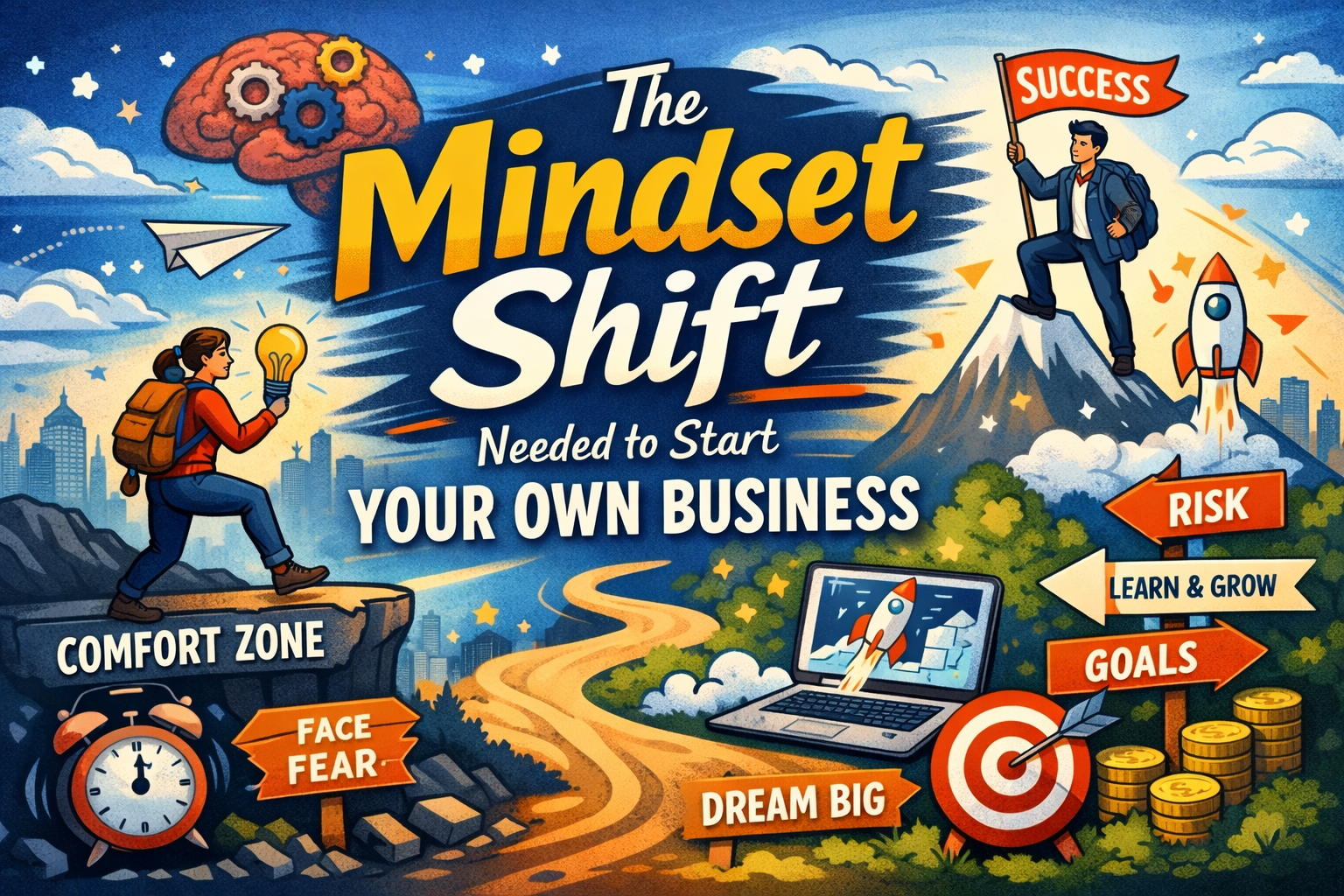
At the beginning, it doesn’t feel like a mindset issue at all. You think about ideas, steps, maybe even timing. But sooner or later, it becomes clear that starting something of your own isn’t just about action — it’s about how you see things before you act.
Thinking changes before anything else does
Most people approach the idea of a business from a familiar place. Stability, predictability, clear expectations. That way of thinking works well in many situations, but it doesn’t translate directly into building something from scratch.
Because in the early stages, nothing is fully defined. There’s no fixed structure, no guarantee that things will go as planned. And that uncertainty isn’t temporary — it’s part of the process.
The shift begins when you stop expecting clarity at the start. Not because clarity isn’t important, but because it usually comes later, not before you begin.
Control becomes something different
There’s a subtle expectation that you should feel in control before moving forward. That you need to understand everything, anticipate outcomes, avoid mistakes.
In practice, it works differently.
You don’t gain control by knowing everything in advance. You gain it by staying engaged while things are still unclear. That’s a different kind of control — less about prediction, more about response.
At first, this feels uncomfortable. You want things to be settled. But over time, you begin to notice that progress doesn’t depend on certainty as much as it depends on movement.

When hesitation starts to look like preparation
There’s a point where thinking turns into waiting. You refine ideas, consider possibilities, look for better timing. It feels productive, but often it’s just hesitation in a more acceptable form.
It doesn’t look like fear. It looks like caution.
And sometimes it is. But sometimes it’s a way of staying in a space where nothing is at risk yet. Where the idea still feels complete because it hasn’t been tested.
A few patterns tend to appear in that stage:
- waiting for the “right moment” that never fully arrives
- adjusting plans without actually moving forward
- searching for certainty instead of accepting partial clarity
None of these feel like avoidance. But they often delay the only thing that creates real progress — starting.
A quieter kind of confidence
Eventually, something shifts. Not dramatically, but enough to notice. You stop looking for the perfect starting point and begin to accept an imperfect one.
That doesn’t mean rushing. It means allowing things to develop as you move, rather than expecting them to be fully formed in advance.
Confidence, in this sense, isn’t about feeling ready. It’s about being willing to continue even when you’re not completely sure.
And that changes everything. Not because the path becomes easier, but because it becomes possible to follow.
Closing thought
The shift that matters most isn’t visible from the outside. It happens in how you relate to uncertainty, to timing, to your own expectations. And once that shift takes place, starting your own business stops feeling like a leap you need to prepare for — and becomes something you can actually begin.
No Responses