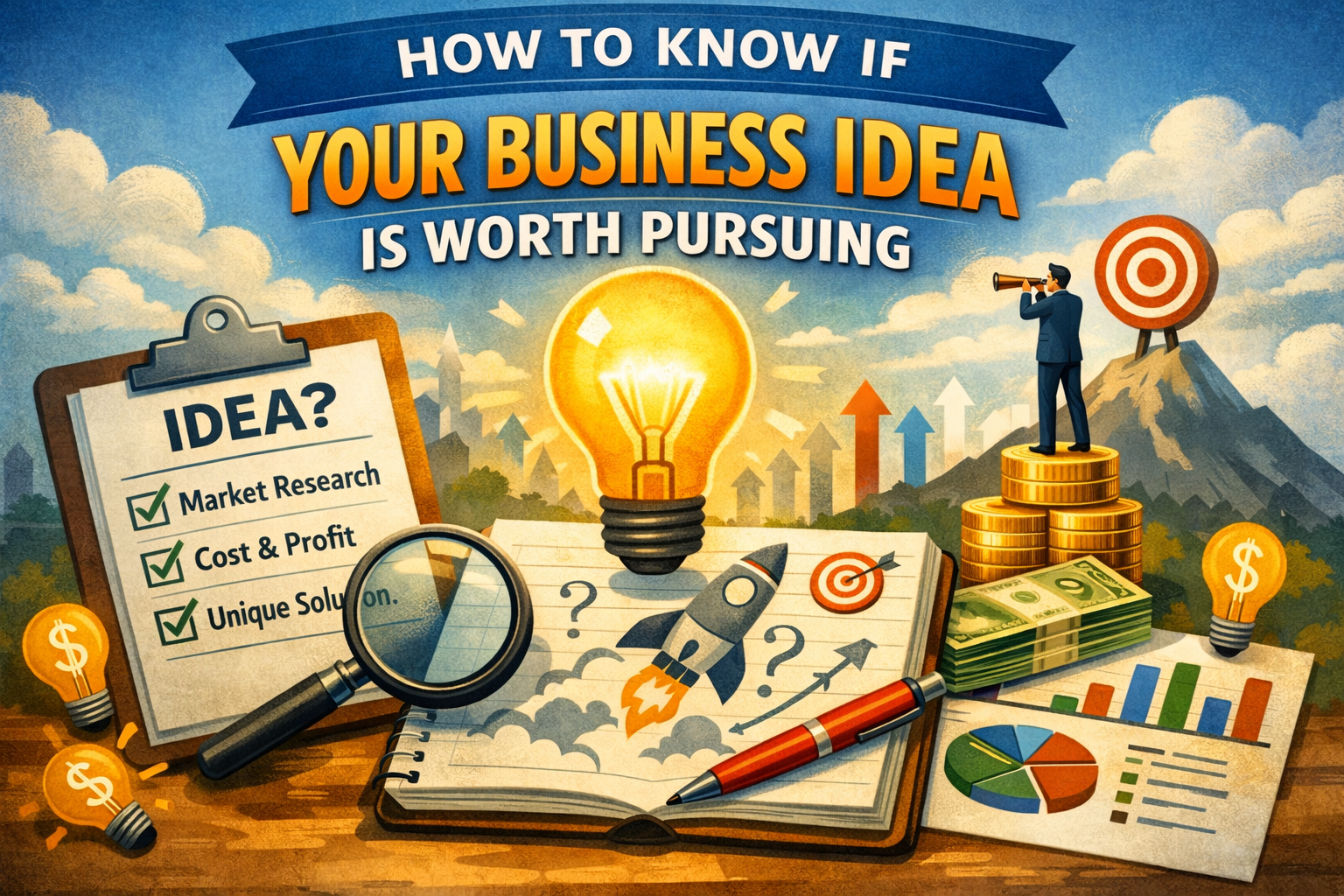
At some point, almost every idea feels promising. It makes sense in your head, maybe even excites you a little. But understanding whether it’s truly worth pursuing is something else entirely — and it rarely becomes clear just by thinking about it longer.
It feels good in theory, but reality tests it differently
An idea can sound solid when it’s still abstract. You imagine how it works, how people might respond, how everything fits together. In that stage, most ideas seem stronger than they actually are.
But the moment you try to place it into real conditions, things start to shift. Questions appear that didn’t exist before. Small gaps become more noticeable.
That doesn’t mean the idea is bad. It just means it’s moving from imagination into something that has to function in a less controlled environment.
The difference between those two states is often where clarity begins.
The reaction of others matters more than expected
There’s a tendency to evaluate ideas internally. You ask yourself if it makes sense, if it feels right, if you would use it. That’s a starting point, but it’s limited.
Once you begin to describe the idea to other people, something changes. Not just what they say, but how they respond.
Sometimes you notice patterns:
- people understand it immediately without extra explanation
- they ask questions that reveal something you hadn’t considered
- or they seem interested, but not enough to act on it
These reactions are subtle, but they often reveal more than your own initial confidence.
And they don’t require large-scale testing — just honest conversations.
A moment when the idea either holds or starts to fade
There’s usually a point where the idea faces a bit of pressure. Not a full test, just enough to see how it behaves outside of your own thinking.
Maybe you try to shape it into something more concrete. Maybe you consider what it would take to actually move forward. That’s when things become clearer.
Some ideas stay stable. They adapt, but the core still feels intact. Others start to lose structure once you look at them more closely.
This is where business idea evaluation becomes less about excitement and more about resilience. Not whether it’s perfect, but whether it still makes sense when it’s no longer protected by abstraction.
A shift from idea to commitment
At a certain point, the question stops being “is this a good idea?” and becomes “am I willing to stay with this when it’s no longer easy?”
That shift is important. Because most ideas can survive early thinking. Fewer can hold attention when they require effort, adjustment, and time.
It’s not about forcing yourself to continue. It’s about noticing whether the idea still feels meaningful once the initial excitement fades.
That’s often where the real answer appears.
Closing thought
Knowing whether a business idea is worth pursuing doesn’t come from a single moment of clarity. It develops through small tests, reactions, and shifts in perspective — until the idea either continues to make sense under pressure or quietly falls away on its own.
No Responses