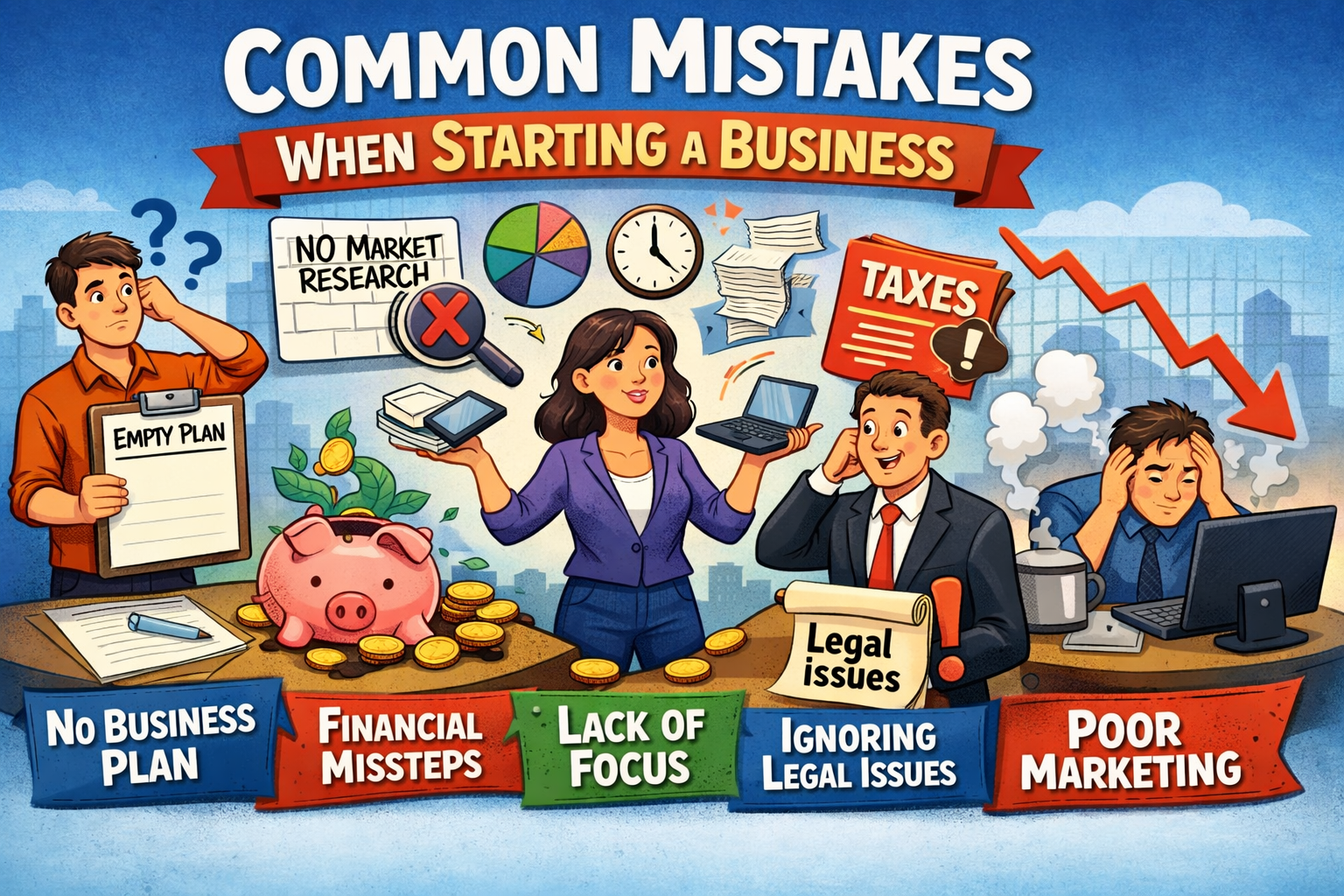
At the beginning, most mistakes don’t look like mistakes. They feel logical, even necessary. That’s what makes them hard to recognize — especially when you’re just starting a business and everything is still taking shape.
Trying to make everything perfect too early
There’s a strong pull to get things “right” before moving forward. The idea, the structure, the details — all of it feels like it should be solid before anything begins.
But perfection at the start often leads to delay.
You adjust, rethink, refine. Then do it again. It feels productive, but nothing actually moves. The process becomes internal, disconnected from real feedback.
What’s interesting is that many things only become clear after you begin, not before. Waiting for certainty can quietly turn into standing still.
Focusing on the wrong things first
When everything feels important, it’s easy to spread attention too widely. Visual details, small decisions, minor adjustments — they all seem necessary.
But not all parts of a business carry the same weight early on.
Some things shape direction. Others only refine it.
A common pattern looks like this:
- spending time on details that don’t affect real progress
- avoiding unclear areas by focusing on what feels easier
- building structure before understanding what it needs to support
None of this is intentional. It’s just easier to work on what feels defined instead of what still feels uncertain.
Expecting things to move in a straight line
There’s often an expectation that progress should feel consistent. Step by step, clear direction, visible results.
But in reality, the process is uneven.
Some things move quickly. Others stall. You might feel progress in one area while another becomes more complicated. That contrast can create the impression that something is going wrong.
It isn’t.
It’s just how things develop when there’s no fixed structure yet. Trying to force everything into a straight line usually adds pressure without improving the outcome.
Holding on to the original idea too tightly
At the start, the idea feels clear. It makes sense, it feels complete, and you want to protect it from unnecessary change.
But once it meets real conditions, adjustments become inevitable.
This is where many people struggle. Not because they can’t adapt, but because changing the idea feels like losing it.
In practice, it’s the opposite. Letting it evolve is what allows it to stay relevant.
Staying too attached to the original version can prevent the business from developing into something that actually works outside of initial expectations.
Closing thought
Most mistakes aren’t dramatic. They’re quiet patterns that feel reasonable in the moment but slow things down over time. And once you start recognizing them, building a business becomes less about avoiding errors completely — and more about noticing when something isn’t moving forward the way it should.
No Responses